
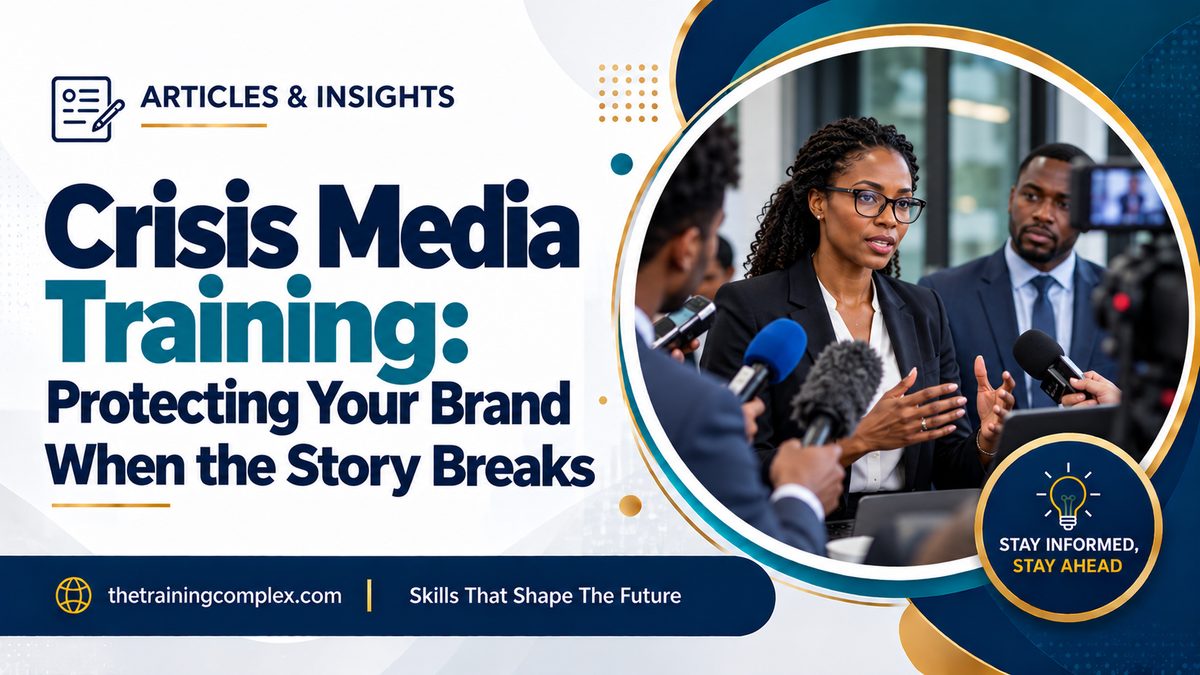
When a crisis hits — a product recall, a data breach, an executive misconduct allegation — the first 24 hours can define your brand for years. Crisis media training exists precisely for this moment: to ensure that the person stepping in front of cameras or fielding calls from journalists is prepared, composed, and on-message. Without it, even a well-intentioned response can escalate damage rather than contain it.
Why Spontaneous Responses Fail Under Pressure
Most executives are accomplished communicators in normal conditions. A board presentation, a client pitch, a town hall — these are high-stakes, but they are predictable. A media crisis is a different environment entirely. Journalists ask questions designed to draw out contradiction, emotion, or admission. Camera crews, tight deadlines, and the speed of social media create a pressure environment that rewires how even experienced leaders think and speak.
Studies of corporate crises consistently show that the initial response — not the incident itself — most often determines long-term reputational damage. A fumbled press conference, an ambiguous statement, or a defensive tone can signal incompetence or bad faith to the public faster than the original story. Structured crisis media training conditions spokespeople to perform under exactly this kind of pressure, turning reactive panic into deliberate, considered communication.
What Crisis Media Training Actually Covers
A rigorous crisis media training programme goes well beyond tips on body language or avoiding the word "no comment." The most effective courses address the full arc of a crisis communication response:
Building a Crisis-Ready Spokesperson Bench
One of the most common vulnerabilities organisations overlook is over-reliance on a single trained spokesperson. If your CEO is the only person prepared to face the media, you are exposed the moment they are unavailable, implicated, or simply not the right voice for a particular incident.
Crisis media training should be treated as an organisational capability, not an individual skill. That means identifying a bench of two to four spokespeople across seniority levels and functions — legal, operations, HR, communications — and ensuring each is trained and periodically refreshed. Different crises call for different faces, and a credible response often requires the right voice rather than simply the most senior one.
Refresher training matters as much as initial certification. A spokesperson trained two years ago and untested since will revert to unprepared behaviour under real pressure. Annual simulation exercises, even short half-day refreshers, maintain the muscle memory that crisis performance requires.
The Role of Internal Alignment Before the Camera Turns On
Effective media response in a crisis is rarely a communications problem alone. It is a coordination problem. Legal, HR, the C-suite, and external PR advisors all have legitimate input into what can and cannot be said — and those conversations need to happen in minutes, not hours.
Best-in-class crisis media training incorporates this reality by including cross-functional teams in scenario exercises. When your legal counsel, communications director, and CEO have rehearsed the decision-making process together under simulated pressure, the real event becomes far more manageable. The training creates shared language, agreed decision trees, and — critically — trust between functions that may otherwise be working against each other when time is short.
Measuring Readiness Before You Need It
Organisations that treat crisis media training as a box-ticking exercise tend to discover its gaps at the worst possible moment. A more disciplined approach involves treating media readiness as a measurable competency — one that can be assessed, benchmarked, and reported to leadership alongside other risk indicators.
Key readiness markers include: the number of trained spokespeople currently active, the recency of their last simulation exercise, the existence of pre-approved holding statement templates for your highest-probability scenarios, and the clarity of your internal escalation protocol. Crisis media training providers who operate at a professional level will help you establish and track these indicators, not simply deliver a day's workshop and move on.
Invest in Preparation Before the Story Breaks
The organisations that emerge from crises with their reputations intact — and sometimes even strengthened — are rarely the ones that were luckiest. They are the ones that prepared. Crisis media training gives your leaders the skills, the instincts, and the confidence to respond with clarity when public scrutiny is at its most intense.
TrainingComplex Institute delivers crisis communications and media training programmes for corporate teams, senior leadership groups, and individual spokespeople. Whether you are building readiness from scratch or sharpening an existing capability, our programmes are designed around the real pressures your people will face. Speak to our team to find out which programme format best fits your organisation's needs.