
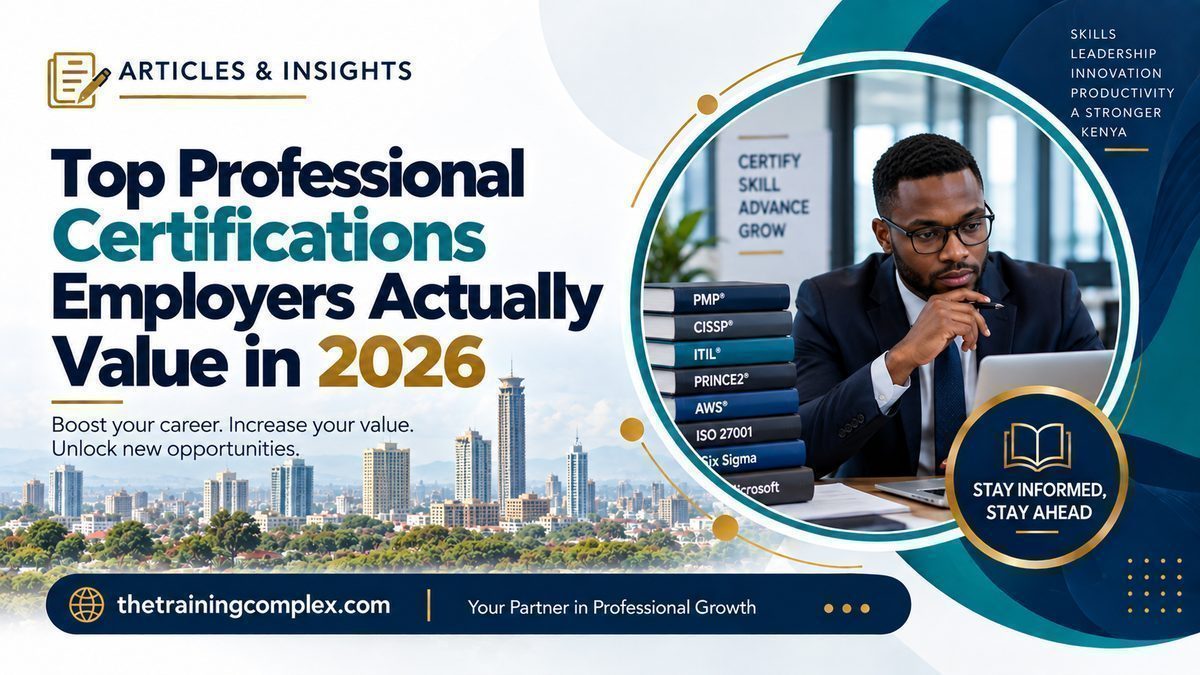
Earning a professional certification has never been more strategic — or more competitive. As organisations navigate rapid technological change, shifting workforce expectations, and tighter hiring budgets, employers are becoming increasingly selective about which credentials they treat as genuine differentiators. If you're planning your professional development for 2026, understanding which certifications actually move the needle — in interviews, promotions, and salary negotiations — is the place to start.
Why Certifications Matter More Than Ever in 2026
The post-pandemic shake-up of the labour market has accelerated skills-based hiring. More employers are deprioritising degree requirements in favour of demonstrated, verifiable competence. A well-chosen certification signals that you've committed time and effort to mastering a specific discipline — and that a credible third party has validated that knowledge. But not all credentials carry the same weight. The certifications employers value in 2026 are those tied to measurable business outcomes, recognised by industry bodies, and increasingly aligned with the technologies and methodologies reshaping how work gets done.
Project Management: PMP and PRINCE2
The Project Management Professional (PMP) certification from PMI remains one of the most sought-after credentials globally, and 2026 is no exception. Employers across construction, technology, financial services, and healthcare consistently list PMP as a preferred qualification for mid-to-senior project roles. Its updated exam format, which now weights agile and hybrid approaches alongside traditional predictive methods, reflects genuine shifts in how projects are delivered.
In the UK and across Europe, PRINCE2 Practitioner continues to hold strong currency, particularly in government, public sector, and large enterprise environments. Holding both PRINCE2 and PMP signals methodological breadth — something hiring managers in complex organisations actively look for.
Data and Analytics: From Foundational to Specialist
Data literacy has become a baseline expectation in most professional roles, but specific certifications are separating candidates who understand data from those who can act on it. The following credentials are generating real employer interest in 2026:
For roles in AI and machine learning, AWS, Google Cloud, and Microsoft Azure certifications each have distinct employer audiences depending on the organisation's cloud infrastructure — worth researching before investing.
Cybersecurity: A Seller's Market for Certified Professionals
The global cybersecurity skills gap shows no signs of closing. Organisations of every size are under pressure to demonstrate robust security posture, and certified professionals remain in genuinely short supply. CompTIA Security+ is widely recognised as the baseline for security roles, with many employers — particularly those working with government contracts — requiring it outright. Beyond that, CISSP (Certified Information Systems Security Professional) commands premium salaries and is consistently listed in senior security and risk management job specifications. For those earlier in their cybersecurity journey, Certified Ethical Hacker (CEH) and CompTIA CySA+ offer credible stepping-stone credentials.
Leadership and Management: The Soft Skills That Are Now Hard Requirements
Technical credentials get candidates through the door — leadership credentials determine how far they progress. Employers are increasingly investing in management development for high-potential employees, and professional certifications in this space are gaining institutional recognition.
Agile and Change Management
As organisations pursue continuous transformation rather than one-off change programmes, credentials in agile methodologies and change management have become highly practical currency. SAFe (Scaled Agile Framework) certifications are particularly valued in large enterprise technology environments. For change management, Prosci ADKAR and the Change Management Institute's tiered credentials are increasingly appearing in job specifications for transformation leads and senior HR roles.
How to Choose the Right Certification for Your Goals
The most valuable certification is the one that closes the gap between where you are and where your target employer needs you to be. Before enrolling, it's worth auditing the job specifications in your target sector, speaking to practitioners already holding the credential, and confirming that the awarding body is recognised by relevant professional associations. Cost, time commitment, and ongoing recertification requirements should all factor into the decision.
Ready to Take the Next Step in Your Professional Development?
Choosing a certification is the first step — finding the right preparation and learning environment is what makes the difference between passing an exam and genuinely building capability. TrainingComplex Institute offers a range of accredited training programmes across project management, leadership, data, and business transformation, designed to prepare professionals for the qualifications that matter most in 2026 and beyond. Explore our upcoming courses and speak to one of our training advisors about the pathway that fits your career goals.