
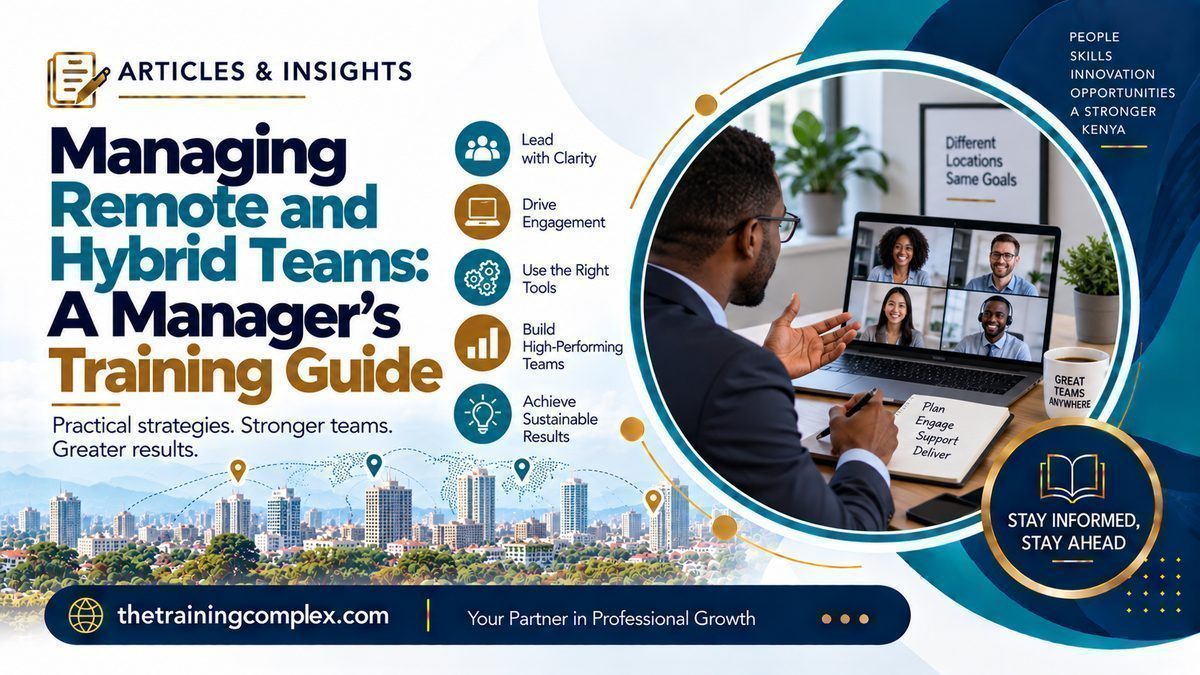
Managing remote and hybrid teams has moved from a temporary workaround to a permanent leadership discipline. Yet most managers leading distributed teams today were promoted into their roles based on in-person performance — and trained, if at all, for a world where visibility and presence were proxies for productivity. That gap is costing organisations in ways that don't always show up immediately: eroding trust, inconsistent performance, quiet disengagement, and a growing divide between office-based and remote employees.
Why Traditional Management Approaches Fall Short
The management instincts that work well in a shared office — dropping by a desk, reading the room in a meeting, noticing when someone seems off — simply don't translate to distributed environments. In a hybrid setting, those instincts can actively cause harm: managers unconsciously favour employees who are physically present, a well-documented phenomenon known as proximity bias. Remote team members receive fewer development opportunities, less informal feedback, and less visibility at the leadership level.
Awareness of this bias is a starting point, but it isn't a solution. Managers need structured habits, communication frameworks, and intentional practices that replace what physical co-location used to provide automatically.
Core Competencies for Managing Remote and Hybrid Teams
Effective distributed team leadership comes down to a cluster of skills that can be learned and practised — but only if organisations invest in developing them deliberately.
Asynchronous Communication
Not every message needs an immediate response, and not every update needs a meeting. Managers who lead distributed teams well know how to communicate with clarity and context in writing, set realistic response norms, and distinguish between issues that warrant real-time discussion and those better handled asynchronously. This reduces meeting fatigue significantly and gives team members in different time zones a genuine opportunity to contribute.
Outcome-Based Performance Management
Measuring performance by output rather than activity is a principle most managers accept in theory and struggle with in practice. Managing remote teams effectively requires clearly defined deliverables, agreed success criteria, and regular structured check-ins that focus on progress and obstacles rather than status updates. Managers need training in how to set meaningful goals at both team and individual level, and how to have performance conversations that build accountability without micromanagement.
Intentional Relationship Building
Psychological safety and team cohesion don't develop accidentally in distributed teams. Managers need to create deliberate touchpoints — regular one-to-ones with a consistent structure, team rituals that aren't just functional, and informal moments that allow people to connect as people rather than task-completers. This isn't soft management; it directly affects retention, collaboration quality, and the willingness of team members to surface problems early.
Inclusive Meeting Design
In hybrid settings, poorly designed meetings systematically disadvantage remote participants. Managers need practical skills in facilitating meetings that give distributed attendees equal voice — from agenda structure and pre-read materials to facilitation techniques that actively draw in remote contributors and prevent the in-room dynamic from dominating.
Building a Remote-Ready Management Culture
Individual manager development matters, but it has limited impact when the surrounding culture doesn't reinforce it. Organisations that do this well typically address three things in parallel:
The Role of Structured Training
Ad hoc guidance and internal lunch-and-learns are rarely sufficient for the scale of behavioural change managing remote and hybrid teams requires. Managers benefit most from structured, applied learning that combines conceptual frameworks with practical tools they can use immediately — ideally with peer learning built in, so they can share challenges and approaches with others navigating the same environment.
The most effective training programmes also account for the hybrid-specific challenges that differ from fully remote contexts: how to run team meetings equitably when some people are in a room together; how to manage performance fairly across different working arrangements; and how to prevent a two-tier team culture from forming around physical presence.
Ready to Develop Your Managers for the Distributed Workplace?
The shift to hybrid and remote working has permanently changed what good management looks like. Organisations that equip their managers with the right skills now will see the difference in team performance, engagement scores, and their ability to retain strong people regardless of location. TrainingComplex Institute offers specialist management development programmes designed for the realities of today's distributed workplace — covering everything from communication and performance management to inclusive leadership and team culture. Explore our leadership and management training programmes to find the right fit for your organisation.